Installing a metal shutter is metalwork, not decoration: heavy loads above a storefront, springs under dangerous tension, and twenty years of service decided in one day of fitting. Here is what a proper project looks like — and what to demand from your installer.
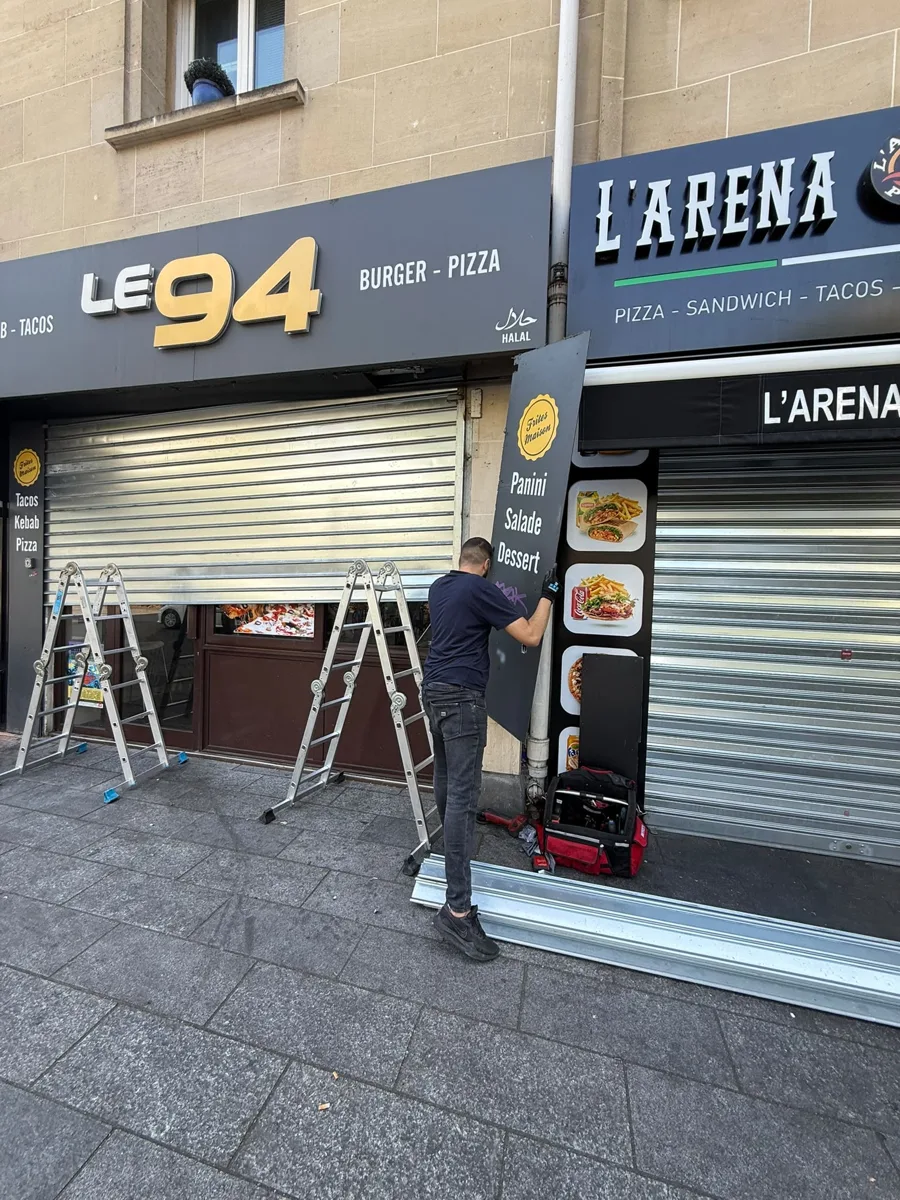
Step 0: choosing the curtain
Solid slats for maximum protection and opacity (jewellers, tobacconists); micro-perforated to show the lit window while resisting entry — the city-centre standard; tube-and-link grilles for arcades. Fitting under the lintel (discreet) or on the facade; manual up to ~8 m², motorised beyond or for daily use. In co-owned buildings and protected areas, facade work may need approvals — a serious installer says so at the quote.
Step 1: the survey
A shutter is made to measure: widths, height, box depth, nature of the supports, hidden networks, and the lintel's load capacity — a wide shutter weighs hundreds of kilos. Thirty to forty-five minutes, ending in an itemised quote: curtain, guides, axle, box, motorisation, locks, fitting, removal of the old unit.
Step 2: removing the old shutter
The most dangerous moment: axle springs stay under tension even on a dead shutter, and uncontrolled release projects metal violently. Professional procedure: zone secured, springs detensioned with tooling, curtain removed slat by slat, then axle and guides. Two to three hours including disposal.
Step 3: fitting, in the order that lasts
Guides first, plumb to the millimetre — any error here means a curtain that drags for life. Then the axle on properly anchored brackets, springs calibrated to the curtain's exact weight (that calibration is what makes 200 kg one-hand manoeuvrable). Then the curtain, the adjustments (spring tension, end stops, locks), and finally the box protecting it all.
Step 4: security devices
Against burglary: anti-lift side locks (defeating the jack attack), protected end plates, reinforced bottom slat. For people: the anti-fall device is mandatory on motorised shutters, with reinforced requirements in premises open to the public. A quote without locks and anti-fall is not cheaper — it is incomplete.
Step 5: your handover quarter-hour
Before signing: ten full cycles, fluid movement without hard points, clean stops at the end positions, locks engaging freely, manual release tested if motorised. Demand the documents: manual, conformity certificate, maintenance requirements — they condition the warranty. A well-fitted shutter is perfect on day one.
Budget
| Configuration | Fitted, incl. VAT |
|---|---|
| Manual shutter, standard shop | €1,500 – €3,000 |
| Motorised, standard shop | €2,500 – €4,500 |
| Micro-perforated, wide front | €3,500 – €6,500 |
| Old unit removal | €300 – €800 |
Distrust abnormally low quotes: they usually skip the locks, the anti-fall or the spring calibration — the three items you don't see on fitting day and pay for in the following years. Allow five to six weeks from survey to fitting: a made-to-measure curtain doesn't wait well for emergencies.
A question, a project, an emergency?
A locksmith answers the phone — price range on the call, firm quote before work, 24/7 across the Paris region, in English.
📞 07 66 54 96 41