A conversation we have weekly, usually too late: a burgled customer discovers their French policy required "a 3-point lock" or "an A2P-certified device" they didn't have — and the payout shrinks. Meanwhile others pay for years for locksmith assistance cover they never think to use. Here is the decoding.
What your policy requires: protection-means clauses
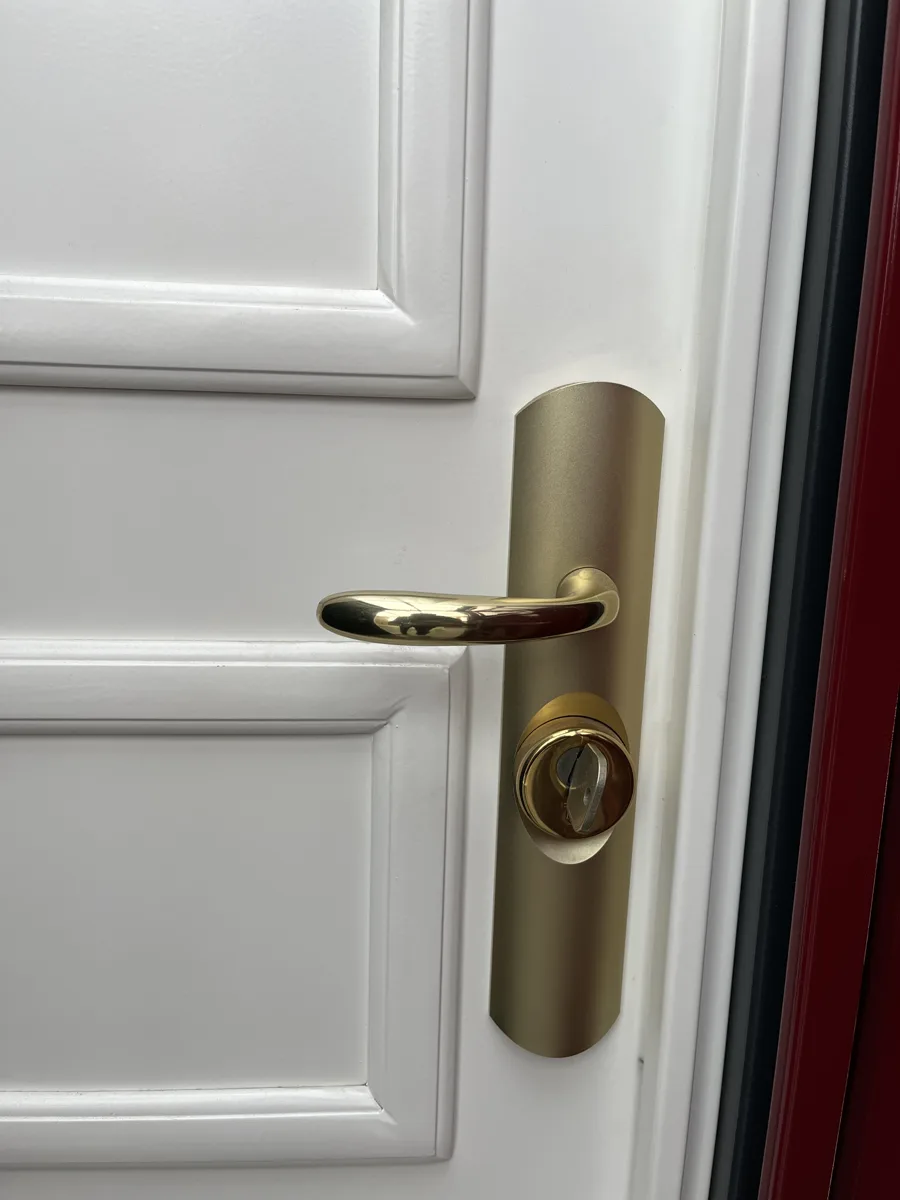
Open the theft chapter of your conditions: nearly every French policy conditions compensation on minimum equipment — from "a security lock" to "two locking points", "a 3-point lock" or "an A2P-certified lock", requirements that climb with the insured contents value. Some add window requirements (shutters closed at night on ground floors) and stricter rules for second homes. Photograph your door, lock and faceplate today and store the photos with your policy: proving prior equipment after a claim becomes trivial.
A2P: the certification insurers recognise
"Certified lock" in a French policy means A2P — the CNPP laboratory certification: 1 star (5 minutes of tooled resistance), 2 stars (10), 3 stars (15); for complete door blocks, A2P BP1–BP3. "High security" or "reinforced" on a box are marketing, not certification: only the A2P logo on the faceplate and the certificate count contractually.
What your policy covers — and you forget to use
Depending on the contract: lock replacement after key theft or loss, emergency door opening via the assistance line (often capped at €150–300 — one phone call to activate), post-break-in repairs including provisional closures, sometimes even the slammed door. The method: police report immediately, claim within the deadline (2–5 working days), itemised invoice and intervention certificate from the locksmith (we provide both), replaced parts kept for the assessor.
The traps
Theft without forced entry — a burglar using your stolen keys leaves no marks, and some policies compensate poorly: that is why replacing the cylinder after key theft is an insurance necessity, often covered by the policy itself. The unoccupancy clause — theft cover may shrink beyond 60–90 days of absence. Depreciation — negotiate new-for-old cover at subscription, not at claim time. Windows — accessible openings may carry their own requirements.
Getting compliant rationally
Read YOUR clause (ten minutes), compare with your actual door (our craftsmen do this free during any visit), upgrade to the required level — a 3-point lock (€400–800 fitted) satisfies most standard clauses, A2P for higher values — and keep invoices and certificates. Declared upgrades can even improve your terms. Everything in this file is decided BEFORE the claim: afterwards, you can only hope the file is good.
FAQ
Can the insurer refuse if the burglar came through a window? Clauses are weighed against the actual entry mode, but borderline cases get argued — full compliance avoids the debate.
Tenant or landlord? The tenant insures the home and its policy's lock clause; heavy upgrades are negotiated with the landlord. The tenant may replace the cylinder at their own cost.
A question, a project, an emergency?
A locksmith answers the phone — price range on the call, firm quote before work, 24/7 across the Paris region, in English.
📞 07 66 54 96 41