Home safes are booming — papers, jewellery, crypto wallets, firearms with legal storage duties — and the market has never been more confusing. Start from the end: what goes inside? Documents call for volume and FIRE resistance (a separate certification — many burglar-proof safes offer none); valuables call for burglary grades your insurer will read; firearms carry legal storage obligations; digital media need fire and humidity protection.
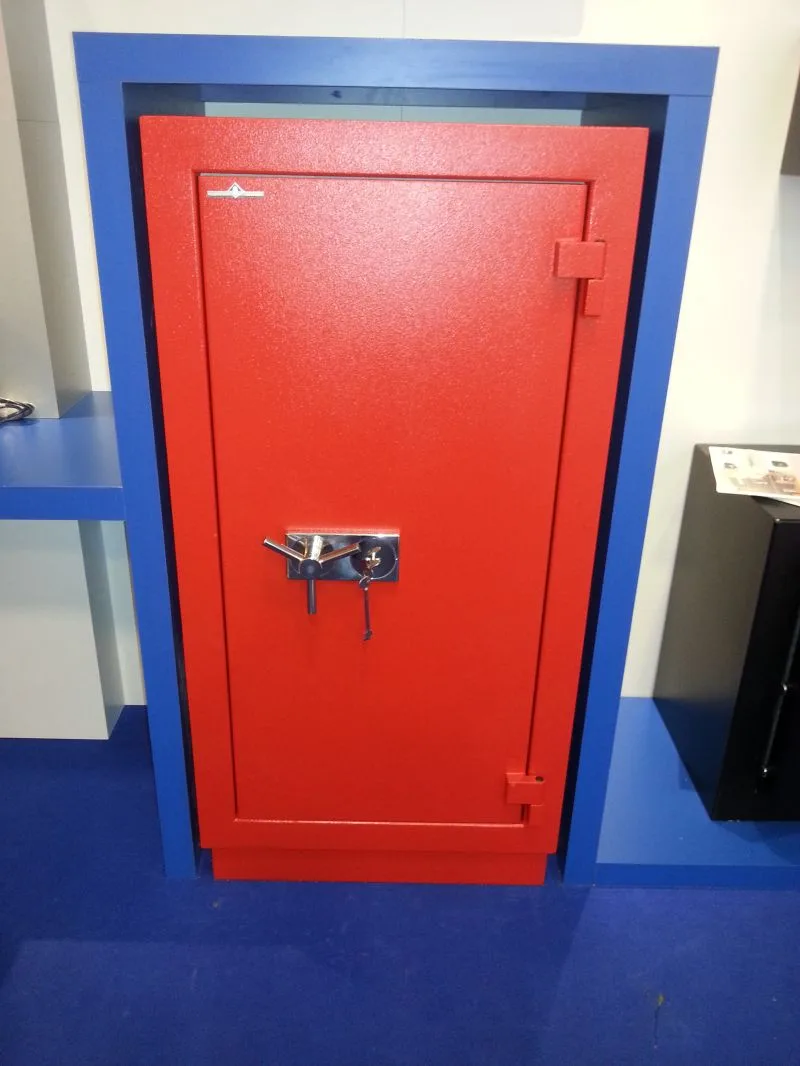
Certification: what "safe" legally means — nothing
The word is unprotected: the 10 kg sheet-metal box and the 300 kg certified safe share it. The objective reference is EN 1143-1, grading safes (0, I, II…) after laboratory attack tests. The practical stake is insurance: each grade carries a ceiling of insurable values — roughly €8,000 at grade 0, €25,000 at grade I, more above (each policy states its figures). Below sit EN 14450 "security cabinets" (S1/S2): fine for organisation, insufficient to insure valuables.
Wall, free-standing or floor
Wall safes hide well but limit volume and demand a suitable wall. Free-standing safes are the versatile standard — on the absolute condition of chemical anchoring into concrete: an unanchored safe under 1,000 kg is luggage with handles. Floor safes resist extraction best under a trap. Placement is free security: burglars search the master bedroom, dressing room and study first — an anchored safe in the utility room adds precious minutes to their clock. And the golden rule: the fewer people know a safe exists, the better it works (unmarked vehicle on request).
The lock
Key (robust, but where do you hide the key?), mechanical dial (indestructible, slow), electronic keypad (today's standard — changeable codes, multi-user; mind the battery warnings), biometric (comfort, on serious ranges doubled by code or key). Always verify the emergency opening and how it works.
Budget
| Solution | Supplied + anchored |
|---|---|
| Security cabinet (documents) | €150 – €500 |
| Certified grade 0–I, anchored | €500 – €1,500 |
| Wall safe, sealed | €600 – €1,800 |
| Grade II and above | €1,200 – €4,000+ |
| Gun cabinet | €400 – €1,500 |
| Safe opening (lost code) | €150 – €450 |
The six mistakes we see monthly
The unanchored safe; the too-small safe (buy double your current need); the factory code never changed; the "hidden" safe in the master bedroom; the emergency key in the next drawer; the grade mismatched to the insurance policy. Each is avoided in one conversation — the free advisory visit exists for exactly that. Keep invoice and certificate with your insurance papers, NOT inside the safe, and a copy elsewhere: proving the safe's existence to the assessor is the one job it cannot do for itself. Lost the code one day? We open non-destructively whenever the mechanism allows — bring proof of your right to the safe, a request that protects you as much as us.
A question, a project, an emergency?
A locksmith answers the phone — price range on the call, firm quote before work, 24/7 across the Paris region, in English.
📞 07 66 54 96 41