Changing a euro-profile cylinder is the most accessible DIY job in locksmithing — and the one where a measuring mistake turns a €60 saving into a weakened door, or a door blocked on a Sunday night. Here is the honest method, and the honest limits.
Measure right — the step everyone fails
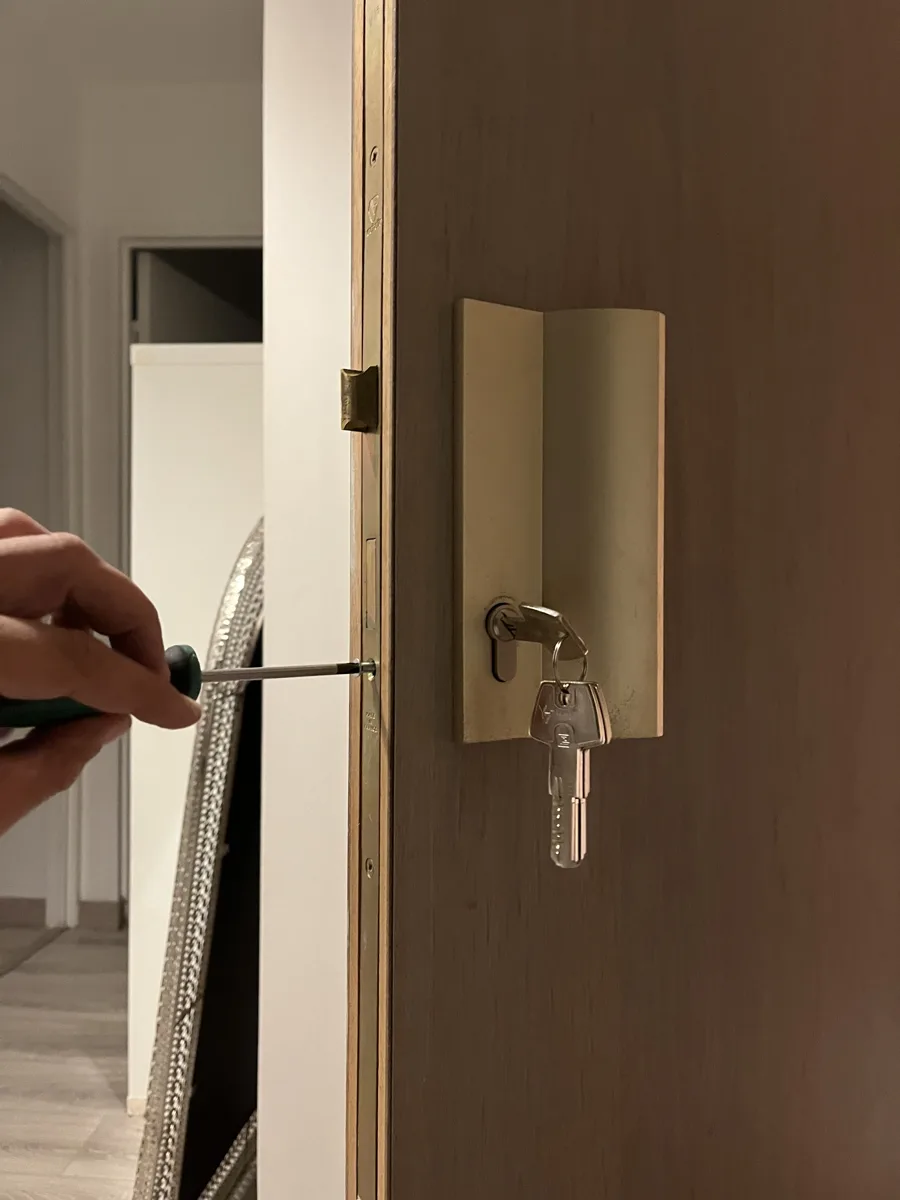
A cylinder is measured as two lengths from the axis of the fixing screw: outside and inside (a "30/40" is asymmetric). Open the door, remove the faceplate screw, turn the key slightly to align the cam, slide the cylinder out and measure precisely. The golden rule: the new cylinder must not protrude more than 3 mm on the street side — a protruding cylinder is a snapping handle offered to burglars, and many doors are made MORE vulnerable by an overlong cylinder bought online.
Choose the level, not just the size
At equal dimensions, cylinders differ enormously: anti-pick trap pins, anti-drill steel inserts, anti-snap break grooves, and anti-copy patented keys with an ownership card. A €15 cylinder protects against a slammed door, not against a visit. Serious mid-range starts at €40–80 supply-only; high-security card cylinders run €90–200. Worth knowing: clutch cylinders open even with a key left inside (precious with children), and thumbturn versions lock without a key from inside — same fitting, €20–60 more.
Fitting in five minutes
Door open — always. Faceplate screw out, cam aligned with a slight key turn, old cylinder out, new one in without forcing, screw back without excess. Then test hard: inside and outside keys, ten full cycles door open, then door closed. A new cylinder that catches signals an alignment fault to fix now, not to "let settle".
The five cases where you should NOT do it yourself
1. After a break-in or attempt — the cylinder may not be the only damaged part, and your insurer expects a professional invoice. 2. On a security door or high-end multipoint — protectors and armoured escutcheons condition the whole door's resistance. 3. On a lock already struggling — a new cylinder won't fix the cause; diagnosis first. 4. For card-protected high-security cylinders — fitting may condition the warranty. 5. In a rental without precautions — you may change it at your cost, but keep the old cylinder to refit at the end of the lease.
The real saving
| Option | Cost |
|---|---|
| DIY standard cylinder | €25 – €80 |
| Craftsman, standard cylinder fitted | €90 – €180 |
| Craftsman, high-security card cylinder | €180 – €400 |
The gap — €60 to €120 — buys guaranteed measurement, the right level for your door and insurance policy, stock in the vehicle and a warranty on the work. A careful DIYer does fine on a simple healthy door; every other case justifies the call. Either way: store the ownership card off the key ring, and destroy old cylinders whose keys circulate.
FAQ
Same key for door, cellar and mailbox? Keyed-alike cylinders share one key while remaining separate cylinders — order them together.
New key turns badly? Wrong length, misaligned cam or over-tightened screw: fix now, the jam won't wait six months.
A question, a project, an emergency?
A locksmith answers the phone — price range on the call, firm quote before work, 24/7 across the Paris region, in English.
📞 07 66 54 96 41