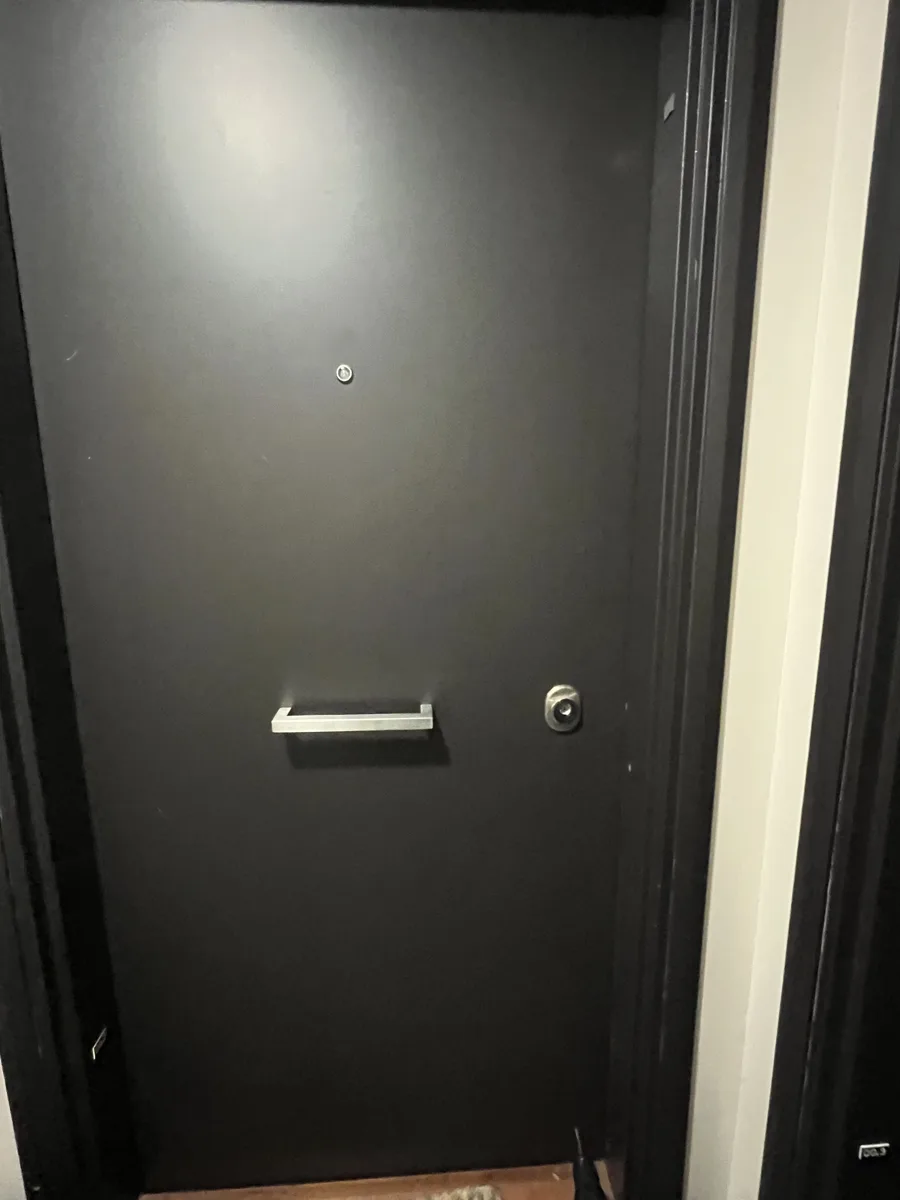
Few subjects produce as many dialogues of the deaf in French co-owned buildings as locksmithing. The base rule: common parts (hall door, intercom, badge system, communal gates — managed and paid via the syndic, shared by tantièmes) versus private parts (your lock, your cylinder — your cost). The landing door is the hybrid: its outside face and appearance belong to the building's harmony (no visible modification without approval — the basis of the authorisations sought for armoured blocks), while structure, lock, cylinder and inside face are private: no permission needed to change a cylinder or lock without touching the outside look. Hence the royal road of armouring that keeps the original panel: the authorisation question mostly evaporates.
The frequent cases
Hall door failing: report to the syndic — a hall that no longer closes at night is a building-wide security fault justifying urgent intervention. Lost badge: through the syndic's provider, billed to the resident (€15–50), like remotes for the car park. Cellar: your cellar door and lock are private; the cellar corridor and its access door are common — after a wave of cellar burglaries, voting the common access's securing is often the building's best collective euro. Mailboxes: the block is common, YOUR box's lock is private (€30–80 fitted). Rentals: tenants pay routine upkeep and lost keys; landlords pay age and obsolescence; a burgled lock goes through the tenant's mandatory home insurance; a tenant may fit their own cylinder at their cost, keeping the old one for the end of the lease — and the landlord cannot demand a copy of the new key.
Master-key systems: the best collective investment
One key per resident (flat + hall + cellar on one ring), hierarchised passes for caretaker and syndic, and no copy without the ownership card. Concrete benefits: no more forty-key caretaker rings, no more wild copies circulating from former tenants, and one cylinder to replace if a pass is lost. Voted in assembly, amortised over years of quiet — free study on request.
Summary table
| Item | Who pays? |
|---|---|
| Hall door, intercom, strike, closer | The building (syndic) |
| Lost badge / remote | The resident |
| Landing-door lock & cylinder | The occupant |
| Landing door's outside appearance | Change needs approval |
| Individual cellar lock | The co-owner |
| Common cellar / car-park door | The building |
| Individual mailbox lock | The occupant |
| Lost key in a rental | The tenant |
| Lock worn out by age | The landlord |
Your building's règlement and your lease can refine these usual rules — they always prevail. Golden reflex before any landing-door project: written description to the syndic BEFORE works. A prior written agreement costs a letter; a restoration injunction costs the works twice. And who pays a locked-out tenant's door opening? The tenant — possibly via their policy's assistance cover: worth checking before dialling.
A question, a project, an emergency?
A locksmith answers the phone — price range on the call, firm quote before work, 24/7 across the Paris region, in English.
📞 07 66 54 96 41